Used. Cleaned.
Tested. Reused.
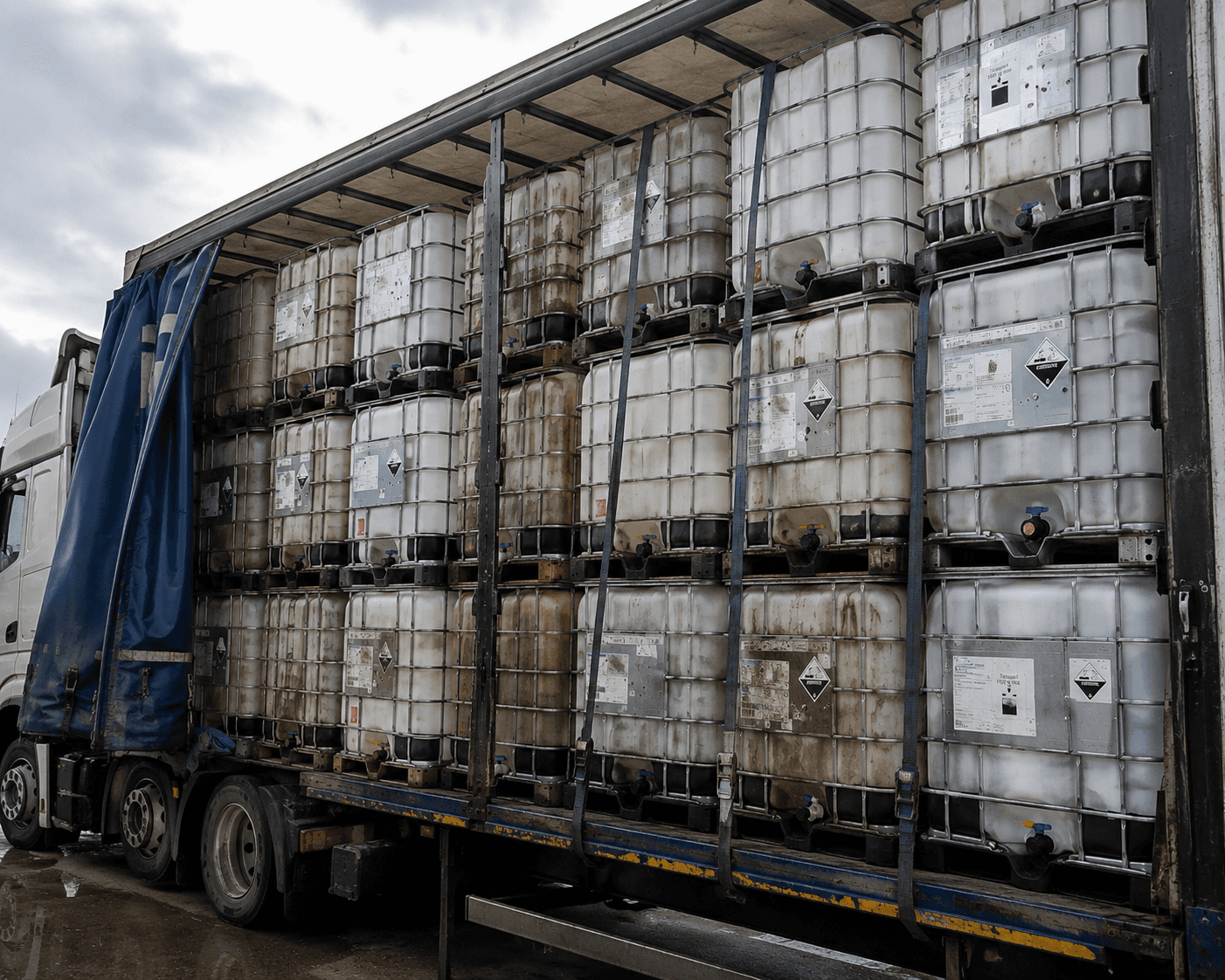
Reconditioned 275 and 330 gallon IBCs in food and industrial grade are the most commonly requested totes. Send one request and partner suppliers in our network prepare quotes. Requests come from across the US; availability depends on partner suppliers.
Free quote request.
Your request goes to partner suppliers in our network, and a partner supplier follows up with a quote. No obligation.
What a reconditioned tote actually is.
Partner reconditioners typically wash the bottle inside and out, inspect the bottle and cage, leak-test the tote, and replace worn gaskets and valves. The details vary by supplier, so ask what their process includes.
- · 275 gal / ~1,040 L
- · ~40 × 48 in footprint
- · HDPE bottle
- · Galvanized steel cage
- · 275 gal / ~1,040 L
- · ~40 × 48 in footprint
- · HDPE bottle
- · Galvanized steel cage
- · 330 gal / ~1,250 L
- · ~40 × 48 in footprint
- · HDPE bottle
- · Galvanized steel cage
- · 275 or 330 gal
- · Cleaned
- · Fittings as found
- · Ask about prior contents
- · 275 or 330 gal
- · New bottle
- · Used cage
- · No prior contents in bottle
- · Various sizes
- · 304 or 316L stainless
- · Heavier when empty
- · Availability varies
Buying reconditioned shouldn’t mean buying a mystery.
When a partner supplier follows up with a quote, it’s worth asking:
- What did the tote hold before?
- How was it cleaned, and was it leak-tested?
- Were the gaskets and valve replaced?
- Does it carry a UN mark, and is that relevant to what you’re shipping?
- What delivery or pickup options are available, and what are the terms?
The basics of a standard 275-gal IBC.
| Capacity | 275 US gal (~1,040 L) |
| Footprint | About 40 × 48 in |
| Bottle | HDPE |
| Cage | Galvanized steel |
| Pallet | Plastic, composite, steel or wood |
| Fill port | Screw cap on top, often 6″ |
| Discharge | 2″ ball or butterfly valve |
| UN mark | Some totes carry one, such as 31HA1; check current DOT/UN rules for hazmat use |
What reconditioning commonly includes
- Interior and exterior wash.
- Inspection of the bottle, cage and pallet.
- Leak test.
- New gaskets, and a new valve where needed.
- Cage repair or repainting where needed.
Options to ask about
- Steel pallet for repeated trips.
- Gasket material suited to your contents.
- Stainless valve.
- Vented fill cap.
- Band heater for viscous contents.
Will a reconditioned tote work for what you’re shipping?
- · Water, brine, glycols
- · Edible oils (food grade)
- · Most cleaners & detergents
- · Adhesives & sealants (industrial)
- · Liquid ag chemicals
- · Lubricants & coolants
- · De-icer
- · Flammable solvents → conductive HDPE
- · Hot fills → check bottle and gasket ratings
- · Dense liquids → heavier-duty cage
- · Acids → check gasket compatibility
- · Food exports → check local rules
- · Contents that must never touch a used bottle
- · High-purity reagents
- · A matching set of identical totes
Common questions.
How quickly can I get reconditioned totes?
It depends on the partner supplier, the quantity and your location. A partner supplier follows up on your request and can tell you what they have available.
How much do reconditioned totes cost?
Pricing is by quote from partner suppliers. It depends on grade, condition, quantity and delivery or pickup.
What about returns and payment?
Returns, payment and other terms are set by the partner supplier. Ask about them before you order.
Can I see a tote before I commit?
Ask the supplier who follows up. Many can send photos or arrange a pickup where you inspect the totes.
Can I use a reconditioned tote for hazmat shipping?
Only if the tote carries a suitable UN mark and meets current DOT/UN rules for your contents. Check current regulations and confirm the details with the supplier.
Request a quote on reconditioned totes.
Send a free, no-obligation quote request and a partner supplier follows up.